


Federal ID Plan Raises Privacy Concerns
Link
By Eliott C. McLaughlin
CNN
Decrease font Decrease font
Enlarge font Enlarge font
(CNN) -- Americans may need passports to board domestic flights or to picnic in a national park next year if they live in one of the states defying the federal Real ID Act.
Homeland Security Secretary Michael Chertoff says there are no plans for a federal database of drivers' information.
The act, signed in 2005 as part of an emergency military spending and tsunami relief bill, aims to weave driver's licenses and state ID cards into a sort of national identification system by May 2008. The law sets baseline criteria for how driver's licenses will be issued and what information they must contain.
The Department of Homeland Security insists Real ID is an essential weapon in the war on terror, but privacy and civil liberties watchdogs are calling the initiative an overly intrusive measure that smacks of Big Brother.
More than half the nation's state legislatures have passed or proposed legislation denouncing the plan, and some have penned bills expressly forbidding compliance.
Several states have begun making arrangements for the new requirements -- four have passed legislation applauding the measure -- but even they may have trouble meeting the act's deadline.
The cards would be mandatory for all "federal purposes," which include boarding an airplane or walking into a federal building, nuclear facility or national park, Homeland Security Secretary Michael Chertoff told the National Conference of State Legislatures last week. Citizens in states that don't comply with the new rules will have to use passports for federal purposes.
"For terrorists, travel documents are like weapons," Chertoff said. "We do have a right and an obligation to see that those licenses reflect the identity of the person who's presenting it."
Chertoff said the Real ID program is essential to national security because there are presently 8,000 types of identification accepted to enter the United States.
"It is simply unreasonable to expect our border inspectors to be able to detect forgeries on documents that range from baptismal certificates from small towns in Texas to cards that purport to reflect citizenship privileges in a province somewhere in Canada," he said.
Chertoff attended the conference in Boston, Massachusetts, in part to allay states' concerns, but he had few concrete answers on funding.
The Department of Homeland Security, which estimates state and federal costs could reach $23.1 billion over 10 years, is looking for ways to lessen the burden on states, he said. On the recent congressional front, however, Chertoff could point only to an amendment killed in the Senate last month that would've provided $300 million for the program.
"There's going to be an irreducible expense that falls on you, and that's part of the shared responsibility," Chertoff told the state legislators.
Bill Walsh, senior legal fellow for the Heritage Foundation, a Washington-based conservative think tank that supports the Real ID Act, said states shouldn't be pushing for more federal dollars because, ultimately, that will mean more federal oversight -- and many complaints about cost coincide with complaints about the federal government overstepping its bounds.
"They are only being asked to do what they should've already done to protect their citizens," Walsh said, blaming arcane software and policies at state motor vehicle departments for what he called "a tremendous trafficking in state driver's licenses."
The NCSL is calling Real ID an "unfunded mandate" that could cost states up to $14 billion over the next decade, but for which only $40 million has been federally approved. The group is demanding Congress pony up $1 billion for startup costs by year's end or scrap the proposal altogether.
Everyone must visit DMV by 2013
The Real ID Act repealed a provision in the 9/11 Commission Implementation Act calling for state and federal officials to examine security standards for driver's licenses.
It called instead for states to begin issuing new federal licenses, lasting no longer than eight years, by May 11, 2008, unless they are granted an extension.
It also requires all 245 million license and state ID holders to visit their local departments of motor vehicles and apply for a Real ID by 2013. Applicants must bring a photo ID, birth certificate, proof of Social Security number and proof of residence, and states must maintain and protect massive databases housing the information.
NCSL spokesman Bill Wyatt said the requirements are "almost physically impossible." States will have to build new facilities, secure those facilities and shell out for additional equipment and personnel.
Those costs are going to fall back on the American taxpayer, he said. It might be in the form of a new transportation, motor vehicle or gasoline tax. Or you might find it tacked on to your next state tax bill. In Texas, Wyatt said, one official told him that without federal funding, the Lone Star State might have to charge its citizens more than $100 for a license.
"We kind of feel like the way they went about this is backwards," Wyatt said, explaining that states would have appreciated more input into the process. "Each state has its own unique challenges and these are best addressed at state levels. A one-size-fits-all approach to driver's licenses doesn't necessarily work."
Many states have revolted. The governors of Idaho, Maine, Montana, New Hampshire, Oklahoma, South Carolina and Washington have signed bills refusing to comply with the act. Six others have passed bills and/or resolutions expressing opposition, and 15 have similar legislation pending.
Though the NCSL says most states' opposition stems from the lack of funding, some states cited other reasons for resisting the initiative.
New Hampshire passed a House bill opposing the program and calling Real ID "contrary and repugnant" to the state and federal constitutions. A Colorado House resolution dismissed Real ID by expressing support for the war on terror but "not at the expense of essential civil rights and liberties of citizens of this country."
Privacy concerns raised
Colorado and New Hampshire lawmakers are not alone. Groups like the American Civil Liberties Union and Electronic Frontier Foundation say the IDs and supporting databases -- which Chertoff said would eventually be federally interconnected -- will infringe on privacy.
EFF says on its Web site that the information in the databases will lay the groundwork for "a wide range of surveillance activities" by government and businesses that "will be able to easily read your private information" because of the bar code required on each card.
The databases will provide a one-stop shop for identity thieves, adds the ACLU on its Web site, and the U.S. "surveillance society" and private sector will have access to the system "for the routine tracking, monitoring and regulation of individuals' movements and activities."
The civil liberties watchdog dubs the IDs "internal passports" and claims it wouldn't be long before office buildings, gas stations, toll booths, subways and buses begin accessing the system.
But Chertoff told legislators last week that DHS has no intention of creating a federal database, and Walsh, of the Heritage Foundation, said the ACLU's allegations are disingenuous.
States will be permitted to share data only when validating someone's identity, Walsh said.
"The federal government wouldn't have any greater access to driver's license information than it does today," Walsh said.
States have the right to refuse to comply with the program, he said, and they also have the right to continue issuing IDs and driver's licenses that don't meet Real ID requirements.
But, Walsh said, "any state that's refusing to implement this key recommendation by the 9/11 Commission, and whose state driver's licenses are as a result used in another terrorist attack, should be held responsible."
State reaction to Real ID has not been all negative. Four states have passed bills or resolutions expressing approval for the program, and 13 states have similar legislation pending (Several states have pending pieces of legislation both applauding and opposing Real ID).
advertisement
Chertoff said there would be repercussions for states choosing not to comply.
"This is not a mandate," Chertoff said. "A state doesn't have to do this, but if the state doesn't have -- at the end of the day, at the end of the deadline -- Real ID-compliant licenses then the state cannot expect that those licenses will be accepted for federal purposes." E-mail to a friend E-mail to a friend
All About American Civil Liberties Union • Michael Chertoff • U.S. Department of Homeland Security
Is a Second More Deadly 9/11 Now In the Works?

There Are Good Reasons to Believe This Is So
Richard Franklin
As you know, a B-52 bomber was equipped with six nuclear warheads mounted on Advanced Cruise Missiles and then flown from Minot Air Force Base in North Dakota to Barksdale Air Force Base in Louisiana on August 30. They were mounted on the wings of the bomber.
According to Michael Madsen's sources, a group of officers within the US Air Force became aware of the theft of these missiles and their nuclear warheads and intercepted them at Barksdale.
After this event somehow leaked to the media, the White House apparently scrambled to concoct a story to account for the theft. They came up with a lulu. They told us it was all a 'mistake'. The six nuclear warheads had been mistakenly mounted on Advanced Cruise Missiles, which were then mistakenly mounted on the wings of the B-52, and then mistakenly flown to Louisiana. If we are to believe the White House's absurd story, nobody among the crew of the bomber was even aware of the deadly cargos attached to the wings of their aircraft.
Wayne Madsen has reported that the nukes were destined for Iraq, but were intercepted by renegade officers of the US Air Force who are opposed to attacking Iran with nuclear warheads in a plan that was devised and was being allegedly overseen by Dick Cheney. According to Madsen, a U.S. attack on Iran using nuclear weapons was scheduled to coincide with Israel's September 6 air attack on a reputed Syrian nuclear facility in Dayr az-Zwar in northern Syria. The interception of the nuclear warheads apparently caused the White House cabal to defer an American coordination with the Israeli attack until such time as the problem of the intercepted nukes was resolved on the domestic front.
The activist group Citizens for Legitimate Government has come up with an astounding revelation that has been ignored by our controlled media. A spokesperson for the group has indicated that six members of the US Air Force who were directly involved in loading or transporting the missiles, were killed within 7 days of the Barksdale interception. Their deaths have been ruled 'accidents'. I repeat, these deaths happened within 7 days of the incident! The odds against this happening are mind boggling.
The victims according to CLG include Airman First Class Todd Blue, 20, who died while on leave in Virginia. A husband and wife from Barksdale Air Force Base were killed on Shreveport-Blanchard Highway while riding a motorcycle. Adam Barrs, a 20-year-old airman from Minot Air Force Base was killed in a crash on the outskirts of the city. First Lt. Weston Kissel, 28, a Minot Air Force Base bomber pilot, was killed in a motorcycle crash in Tennessee. Police found the body of a missing Air Force captain John Frueh near Badger Peak in northeast Skamania County, Washington.
It has been surmised by many that those directing the nuclear thefts embarked on a cleanup operation to silence any persons who were not part of the conspiracy but had knowledge of exactly what had gone down at Minot and Barksdale Air Force Bases. It defies common sense to come up with any other explanation for the six deaths, a figure that may already be out of date. Any further deaths may quite possibly be kept from the media.
While the White House has concocted a coverup story to explain the, theft of six Advanced Cruise Missiles carrying nuclear warheads, it has not explained why it is that six such missiles were loaded at Minot, but ONLY FIVE ARRIVED AT BARKSDALE! There is only one possible explanation. Somewhere between the Minot and Barksdale, the plane landed to deliver one missile with its warhead.
A Patriotic Communist's Opinion
"I’m sorry, but I don’t want to be an emperor. That’s not my business. I don’t want to rule or conquer anyone. I should like to help everyone if possible - Jew, Gentile - black man - white.
We all want to help one another. Human beings are like that. We want to live by each other’s happiness - not by each other’s misery. We don’t want to hate and despise one another. In this world there’s room for everyone and the good earth is rich and can provide for everyone.
The way of life can be free and beautiful, but we have lost the way. Greed has poisoned men’s souls - has barricaded the world with hate - has goose-stepped us into misery and bloodshed. We have developed speed, but we have shut ourselves in. Machinery that gives abundance has left us in want. Our knowledge has made us cynical; our cleverness, hard and unkind. We think too much and feel too little. More than machinery we need humanity. More than cleverness, we need kindness and gentleness. Without these qualities, life will be violent and all will be lost.
The aeroplane and the radio have brought us closer together. The very nature of these inventions cries out for the goodness in man - cries for universal brotherhood - for the unity of us all. Even now my voice is reaching millions throughout the world - millions of despairing men, women, and little children - victims of a system that makes men torture and imprison innocent people. To those who can hear me, I say: ‘Do not despair.’ The misery that is now upon us is but the passing of greed - the bitterness of men who fear the way of human progress. The hate of men will pass, and dictators die, and the power they took from the people will return to the people. And so long as men die, liberty will never perish.
Soldiers! Don’t give yourselves to brutes - men who despise you and enslave you - who regiment your lives - tell you what to do - what to think and what to feel! Who drill you - diet you - treat you like cattle, use you as cannon fodder. Don’t give yourselves to these unnatural men - machine men with machine minds and machine hearts! You are not machines! You are not cattle! You are men! You have the love of humanity in your hearts. You don’t hate, only the unloved hate - the unloved and the unnatural!
Soldiers! Don’t fight for slavery! Fight for liberty! In the seventeenth chapter of St Luke, it is written the kingdom of God is within man not one man nor a group of men, but in all men! In you! You, the people, have the power - the power to create machines. The power to create happiness! You, the people, have the power to make this life free and beautiful - to make this life a wonderful adventure. Then in the name of democracy - let us use that power - let us all unite. Let us fight for a new world - a decent world that will give men a chance to work - that will give youth a future and old age a security.
By the promise of these things, brutes have risen to power. But they lie! They do not fulfil that promise. They never will! Dictators free themselves but they enslave the people. Now let us fight to fulfil that promise! Let us fight to free the world - to do away with national barriers - to do away with greed, with hate and intolerance. Let us fight for a world of reason - a world where science and progress will lead to all men’s happiness. Soldiers, in the name of democracy, let us unite!"
--Charlie Chaplin
$315 Billion
Ever visualized $87 billion, the amount President Bush announced on national television that he was going to ask the Congress to grant him to continue the fight on terror in Iraq and Afghanistan. President Bush asked for this money on September 7th, 2003, for the fiscal year, beginning October 1, 2004. Since before then, to the end of September, 2007, the United States has dedicated approximately $315 billion dollars to the cause.
Have a visual representation of this huge amount of money after the jump
It is impossible for anyone to visualize such huge amounts of money. Lets have a look…..
One dollar … it’s roughly 6 inches long, and 2½ inches wide. It’s roughly as thick as a regular piece of paper.
$1 will buy you a chance to win up to $3000 with a Connecticut scratch-off lottery ticket called the “Emerald Green Tripler.”
Six dollars … set side by side, roughly 12 inches long, and 7½” inches wide. Very roughly, a little longer, but narrower than a sheet of paper.
$6 will buy you about than 2 gallons of gas (at $3.00 a gallon), but you could only buy 1½ gallons of milk, which sells for $3.99 a gallon in Charlotte, NC.
Three Thousand dollars … roughly the thickness of a ream of paper, 2 inches thick or 500 sheets. If you made a single stack, it would be a foot high.
You could buy a 50" Widescreen, Flat Panel, HD-Ready Plasma TV for this amount of money.
Seventy-Two Thousand dollars … is about the size of a whole box of copier paper. This is roughly what it would cost you to buy a 2007 Jaguar XK8 2dr Convertible.
Three-Hundred-and-Sixty Thousand dollars … A stack 5 feet tall. Shorter than the average American man. If you made a single stack, it would be 120 feet high.
You can buy a 3-bedroom, 2 bath, 1973-sq. foot condo in Las Vegas, Nevada for this amount of money.
Nine Million dollars … The pile is 5 feet tall, 10 feet long, and 6¼ feet wide. A single stack of dollar bills in this amount would be 3,000 feet high.
This horde is comparable in size to a single compact car. You could buy 489 of them for the amount, though, with enough cash left over to fill up the gas tanks of 162 of them.
But this amount of money is more than four times what you can expect to earn in your entire life, if you are an American with a college degree.
Nine-Hundred Million dollars… The mound of cash is now 20 feet tall, 50 feet long, and 31¼ feet wide. The single stack of dollar bills is now climbing to 300,000 feet, or 56.8 miles.
It is about half as long as a conventional tennis court.
This is the dollar amount for the damage caused by a natural disaster, according to insurance claims filed by victims in four states that were affected by a category 3 hurricane, (Dennis) in July, 2005.
This amount of money is what an ideal elementary school class size (400 students) can expect to earn in their lifetimes, combined.
Fifteen billion dollars … This pile of money is 60 feet high, 150 feet long, and 62½ feet deep.
This is the amount of money that the US Army has paid to Halliburton (a company once led by Vice President Dick Cheney) since late 2001 in no-bid contracts to perform services such as delivering food and fuel and constructing housing for U.S. Troops around the world, and has been persistently dogged with allegations for fraud, poor quality, overpricing, and other abuses. (On July 13, 2006, the US Army announced that it would end its dealings with the company.) Eighty-Seven Billion dollars … This is what the President asked for on September 7th, 2003. It is 100 feet tall, 250 feet long, and 125 feet wide. A stack of singles would be 28,998,000 feet, or over 5,492 miles, or a round-trip between Washington DC and Los Angeles, California. (2,650 miles, one-way).
A Boeing 737-200 jet is 100 feet long. You could fit 2 of those jets nose to nose along the length of this pile, and have room to spare.
If we spread the $87 billion over an American football field, we would not be able to see much of the game. The players would be buried in 55 feet of money.
$87 billion is more than all of the states’ current budget deficits, combined. $87 billion is more than twice the amount we’re spending on Homeland Security. One-Hundred-Sixty-Six Billion dollars … this represents the total amount of money President Bush spent in Iraq & Afghanistan by the beginning of fiscal year 2004 : the $87 billion he asked for, plus the $79 billion he’d already spent.
You can barely see the man down in the corner.
This pile is 500 feet long at its longest point, which is quite a bit longer than an American football field. The roof opening of the Reliant Stadium in Houston, Texas, is 500 feet long. This pile of money is still 100 feet tall, and 125 feet wide. If you stacked the bills in a single column, it would be 55,333,200 feet tall, or almost 10,500 miles, or 1.68 times the distance between Washington DC and Baghdad, Iraq.
$166 billion is $568 for every man, woman and child in the United States. It’s $3,269 for every person in Iraq and Afghanistan.
One-Hundred-Ninety-One Billion dollars … April 17, 2004 : “The President wants Congress to grant him another $25 billion to continue the fight in Iraq and Afghanistan, but members of both parties in Congress indicated strong reservations about giving the Pentagon the free hand it is seeking to spend the money.”
“Responding to tough questions from senators in both parties, (Deputy Defense Secretary Paul D.) Wolfowitz acknowledged that, with war costs running about $4.5 billion a month, far more money will be needed next year than is now on the table. ‘There will be a request for a full year supplemental early next year. It will sure be much larger than $25 billion,’ he said.”
Two-Hundred-Seventy-Two Billion dollars …
UPDATE : April 25, 2005
Senate OKs $81B In Spending for Iraq, Afghanistan
WASHINGTON | The Senate on Thursday overwhelmingly approved $81 billion for wars in Iraq and Afghanistan in a spending bill that would push the total cost of combat and reconstruction past $300 billion.
Both the Senate and House versions of the measure would give President Bush much of the money he requested but the bills differ over what portion should go to military operations.
The Pentagon says it needs the money by the first week of May, so Senate and House negotiators are expected to act quickly to send the president a final version of the spending bill. (AP)
This pile is 250 feet long, and 125 feet wide. It’s 320 feet high at the tallest point, which is as tall as St. Steven’s Tower, the clock tower that houses Big Ben at Parliament, in London, England.
Three-hundred-fifteen billion dollars …
Update : July 21, 2006
This is the amount of money the US has allocated for the wars in Iraq and Afghanistan, to be spent by September 30, 2006, the end of the fiscal year. And the Senate is working on a spending bill that will add another $50 billion more in spending for 2007.
This pile is 125 feet wide, 200 feet deep, and 450 feet tall.
450 feet is the height of a 38-story building. It’s the hieght of the Millenium Wheel in London. It is also the height of the Luxor Hotel in Las Vegas and the Louisiana State Capitol Building.
If you were to stack the money in a single stack, your stack would be 19,887 miles tall, enough to wrap the Moon at its equator almost 3 times.
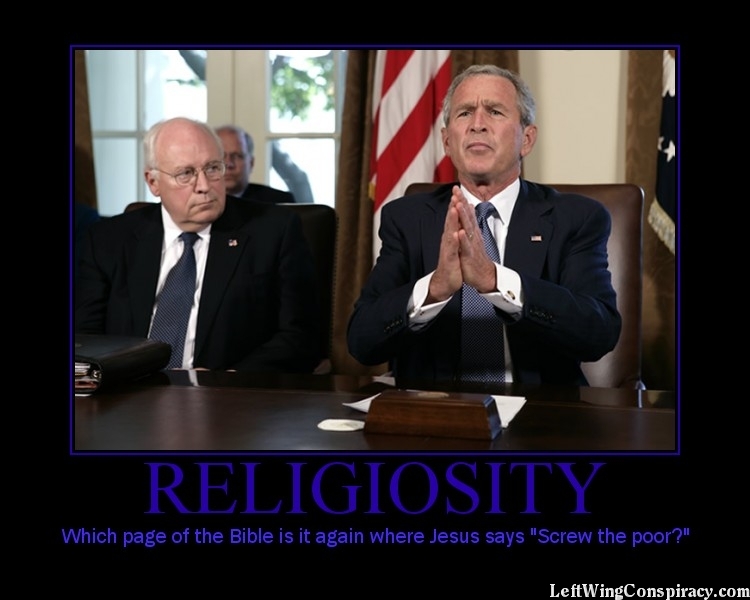
Jesus was a Budhist Jew, Paul Founded Christianity
Before I begin, I would like to make it clear that I believe Jesus existed, whether his name was really Jesus or not. I also hold a high reverence for his teachings, which I try to live by every day. I just don't believe in hell, heaven, killing, and damnation. I have no doubt that some readers will consider me a liar who thinks he knows everything, but that is simply an untrue judgment. There is a lot I don't know and I feel that the key to progress is in embracing that idea. It is the way of education and especially science, which I hold in high regard. Failure to realize our short-comings is failure to progress.
Because I have not studied Judaism, I cannot really say factually how the Jewish people see Jesus. However, it is my understanding that he is simply regarded as a teacher. I find it odd that Jesus was a Jew, which is not argued, yet alleged followers of Jesus denounce many Jewish beliefs and traditions and harbor a new set of beliefs, not taught by Jesus. The bible states that Jesus was like man in all ways except sin. What does this mean? It seems to say that Jesus was a man, in all ways with the exception of the fact that he lived by strict morals that were scarcely found in the religious practices of that time and place. I have heard about the parallels of his teachings and those of Buddhism. Were these coincidences or something else? It is undeniable that a good portion of Jesus' young adult life is unaccounted for pursuing his teachings of logical, undeniable morals. Where did he go? Where did these new insights come from? In 1887 a respected Russian journalist named Nicolas Notovich published a book called "The Unknown Life of Jesus." The book was, obviously, called blasphemy. Notovich claimed his book was a factual account of his trip to the Himalayas in northern India to an isolated Buddhist monastery. Notovich wrote about ancient Buddhist scrolls speaking of a scholar and prophet named Issa, a foreigner from a small, Mediterranean country who arrived as a teenage boy to study the teachings of the Buddha. He was there 500 years after the death of Buddha, which coincides with the time of the lost years of Jesus' life. In 1902, a Hindu priest came to the same monastery and translated those scrolls with the same conclusion. There are many reports of Jesus visiting other countries, going as far north as ancient England to meet the Druids. It seems likely to me that the success of christianity should be attributed to the fact that, for quite some time, Jesus traveled thousands of miles, preaching all the way. The bible even states that Jesus' great uncle traveled to England often as a merchant. Joseph of Arimathea was the uncle of Mary and a successful tin merchant, which tin was abundant in England and similar in value to present-day steel. It was quite likely that Jesus accompanied him at least once. Loyal great uncle, Joseph, carried on Jesus' teachings after the crucifixion.
Jesus was brilliant in the respect that instead of preaching to the leaders of countries who would have surely persecuted him (oh yeah, they did), he preached to the poor, telling them they will inherit the kingdom of heaven. In his later days, he claimed to be the son of god, which originally could have simply meant that he obeyed, honored, and taught what god would teach like a good son would do, but later was blatantly a claim to be of god's seed. I would attribute this to egotism because at this point, Jesus was considered a leader and a savior in the sense that Gandhi was savior to his people. I mean no disrespect, but let's be honest. If Jesus is capable of anger and hostility (his persecution of the merchants), then why not egotism and perhaps a deliberate lie, albeit for the greater good. In fact, the alleged lost books of the bible speak of how Jesus was even capable of murder. Keep in mind that I do not consider these ideas as facts, but there is just as much evidence, if not more in some cases, as the truth of the complete works of the bible.
The bible also states that Jesus followed the practices of Judaism in every regard. This means that Jesus was circumcised, which makes a man worthy of marriage, and also means that he took a wife, which is necessary in Judaism in order to be a rabbi (priest/teacher). It is obvious if you read the new testament that Jesus was married to Mary Magdalene, whom his disciples were jealous of and whom Jesus kissed all the time. There is also a story of a wedding in which it doesn't say specifically who was married, but Jesus and Mary were in charge of. Obviously, this was a method in catholicism to portray the purity of Jesus, but it would have been sacrilegious in those times. Also in catholicism, Mary is portrayed as pure, even though the bible states Jesus had four brothers and at least two sisters (because of the use of the plural "sisters"). It was his brother, James, who also attempted to continue the ministries of Jesus.
Considering that Jesus was a devout Jew, why is it that his life spawned a new religion altogether? Do you really believe that this is was Jesus wanted? Why is it that most christians don't know that Paul, previously known as Saul, was Jesus' adversary. He only claimed an alliance with Jesus' teachings after Jesus was crucified. It was only then that he claimed to continue the teachings of Jesus, although he had radically different opinions on how to obtain the kingdom of heaven.
Paul vs. Jesus
One of the most famous criticisms comes from Thomas Jefferson, who wrote in a letter to James Smith, that "Paul was ... the first corrupter of the doctrines of Jesus." (Works, 1829 edition, vol. 4, p. 327.) George Bernard Shaw, the English playwright, is widely quoted as having said that: "...it would have been a better world if Paul had never been born."
Jesus reportedly teaches that BEHAVIORAL requirements (works/deeds), rooted in an internal change of spiritual growth within the person (not external or apart from the person, though the gift of teaching and techniques to achieve this personal change are a gift of grace not earned or deserved by us, but requiring ACTIONS [deeds] to implement), are integral to salvation. While perhaps it is not possible for us to "earn" the "free gift" that Jesus reportedly provides -- a teaching of the universal compassionate love by which the evil within us CAN be transformed into a more holy kindness of love -- the Jesus account clearly includes a behavioral component to his requirements for "salvation." While he does not say that this satisfies any "debt," he still requires it; perhaps he is demanding merely a small partial "payment" as a gesture of "good faith." (In fact, James suggests this by his comments in James 2:26, that we demonstrate our faith -- if it is genuine -- BY our works or deeds.)
Some will say that puny mortals can never perform enough good behavior to "earn" or "merit" salvation based on the value of their deeds -- that the attempts at human righteousness is as "filthy rags."
Aside from the fact that this simply contradicts Jesus, the point is not whether or not our puny mortal attempts at righteousness have sufficient intrinsic value. Jesus never says that compassionate deeds "earn" salvation, or that any of us could ever "merit" the very gift of our existence. He merely sets that as the standard for compliance. Just as a child may offer its parents or grandparents an awkwardly-drawn piece of art, which likely holds little real artistic merit (perhaps in terms of art critics it might be as "filthy rags"), still the parents sincerely and genuinely cherish such efforts. It may not "merit" winning an art contest and may be able to "earn" very little, but loving parents find it good enough to represent the qualities THEY deem of real and lasting value. The point is that Paul sets the standard for salvation as faith or belief in accepting Jesus (see below) while Jesus explicitly rejects this standard (see Matt 7:21-27) and sets the standard at universal compassionate love expressed in actions, as noted in greater detail in the next few paragraphs.
Why would a loving god, as spiritual father on a more perfect scale, for those who believe him to be that, not be able to give even greater acceptance, even of "filthy rags," if sincerely offered as the best effort ... ESPECIALLY if he has said that he would do so?
To argue against that is to join Paul in contradicting the teachings of Jesus.
In the Sermon on the Mount, near the beginning of his ministry, Jesus is shown as introducing a bold new concept, not only that we should love friends and neighbors, but our enemies as well.
When asked by a lawyer what the most important commandment in the LAW was, Jesus reportedly answered (as reported in Matt 22:36-40 and Luke 10:25-37) with references from the Old Testament, that the GREATEST law was to love god (see Deut 6:5) and the second was to love your neighbor as yourself (see Lev 18:19). In the Luke text, the lawyer specifically asks what is necessary for eternal life (verse 25) and after Jesus references the two GREAT commandments, he says "This DO and you will live" (verse 28) -- showing clearly that salvation is related to works/deeds/actions, however important faith might be to motivating such behavior. Note further, that in the Luke version, this was illustrated by an example, the parable of the Good Samaritan, which was used to define "neighbor" very broadly, to include enemies. The Samaritan (the lowest of the outcasts) is the one who exemplifies this broad definition, and who provides the example of one who is saved by their compassionate actions toward their enemy. Yet the Samaritan is not even a believer, not one having "faith" and not one who has accepted Jesus as savior, yet this is who Jesus chooses as the example of one who gains eternal life, which is what the lawyer specifically asked.
Another time during his ministry, Jesus taught that the people who would go to heaven (be saved) must be as little children (Matt. 18:4-5; 19:14; Mark 9:36-37; 10:14-15; Luke 18:15-17), while Paul wrote that maturity demands us to forsake the things of childhood (I Cor 13:11).
Thus, Jesus teaches us that the kingdom of heaven will be filled with those who lived their lives in active compassion and childlike innocence, while Paul envisions a heaven of crusty, serious "mature" grouches who merely have to profess "acceptance of" or "belief in" Jesus without ever actually performing a single kind, compassionate, cheerful or childishly playful deed.
In his last teaching before going to the upper room for the Last Supper and the "beginning of the end," Jesus described in Matt. 25:31-45 the final judgment as being based solely and entirely on behavioral responses to internalized compassion. And Jesus makes it very clear that those who DO express universal compassion in behavioral action WILL BE SAVED, and those who do not will NOT be saved. Period. There is no other qualification.
Subscribe to:
Posts (Atom)


